PPL(A) Exercise 16 ✈︎ Forced landing without power

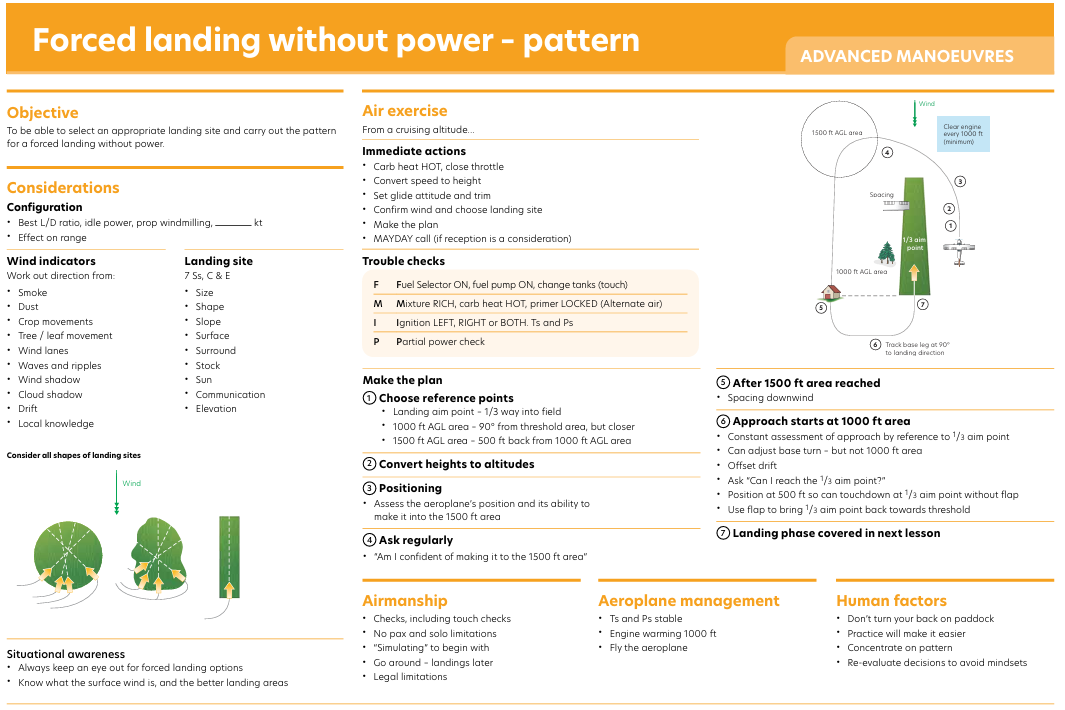
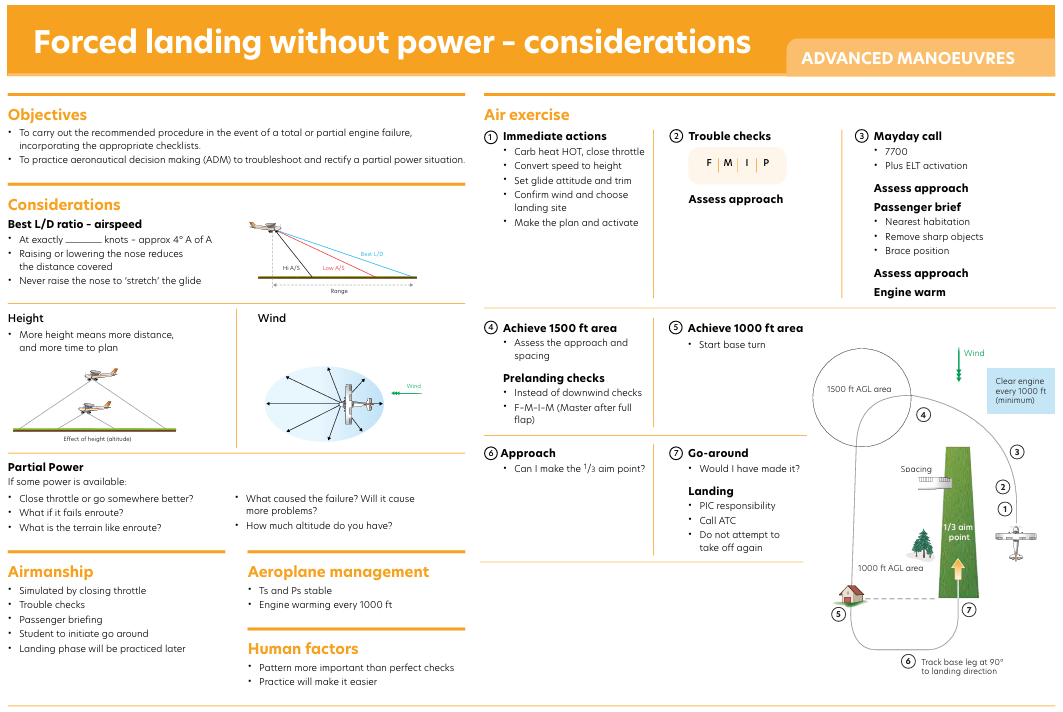
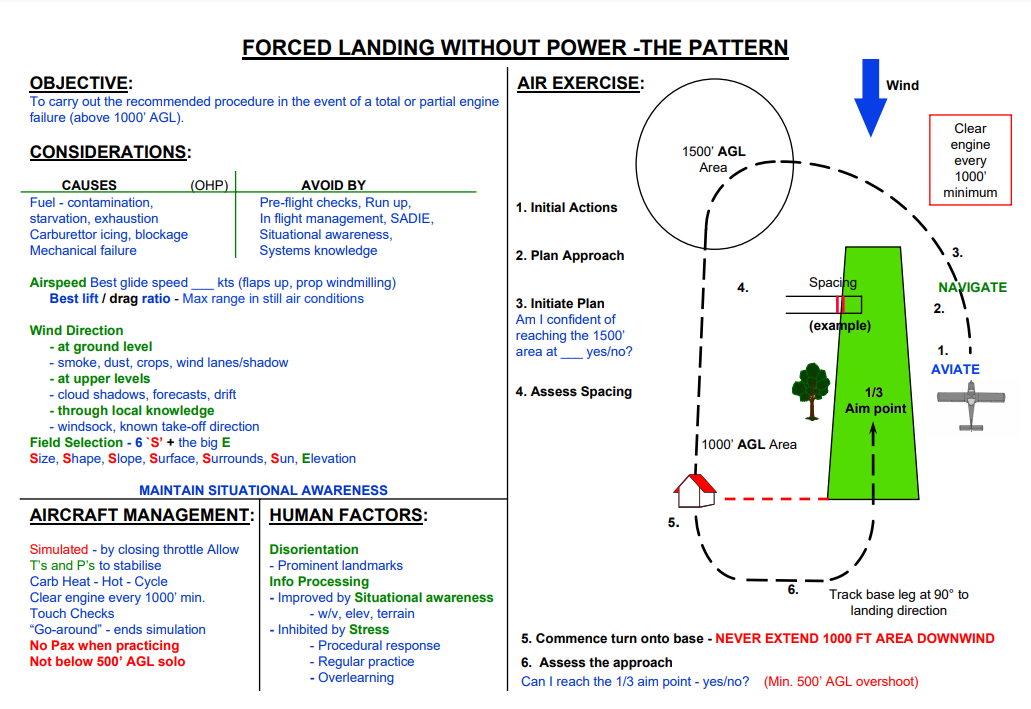
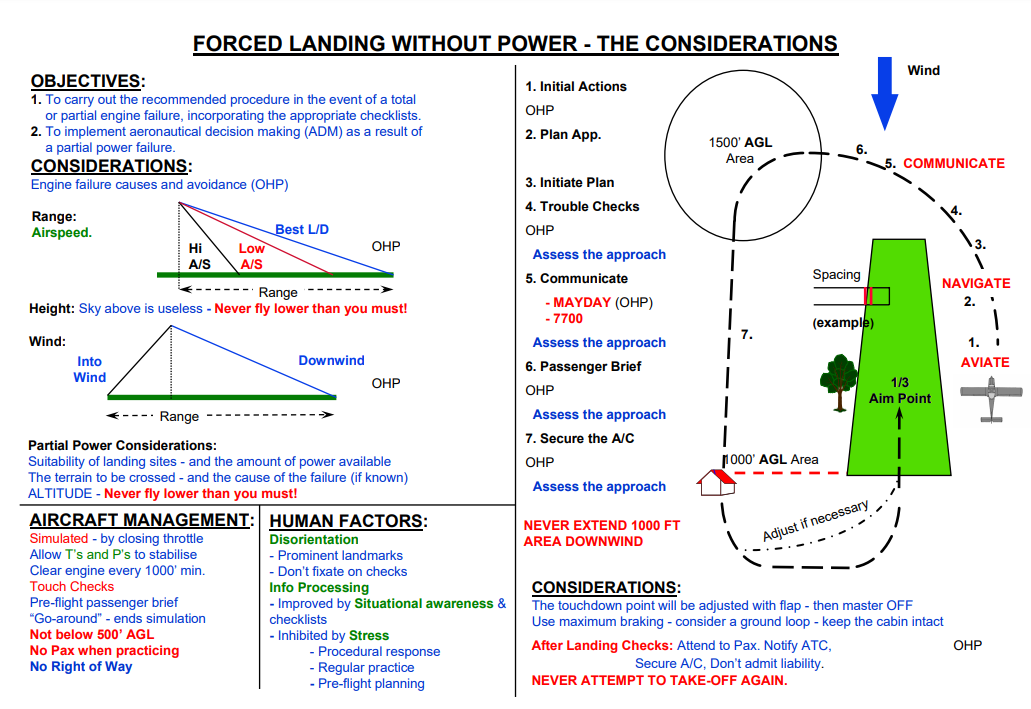
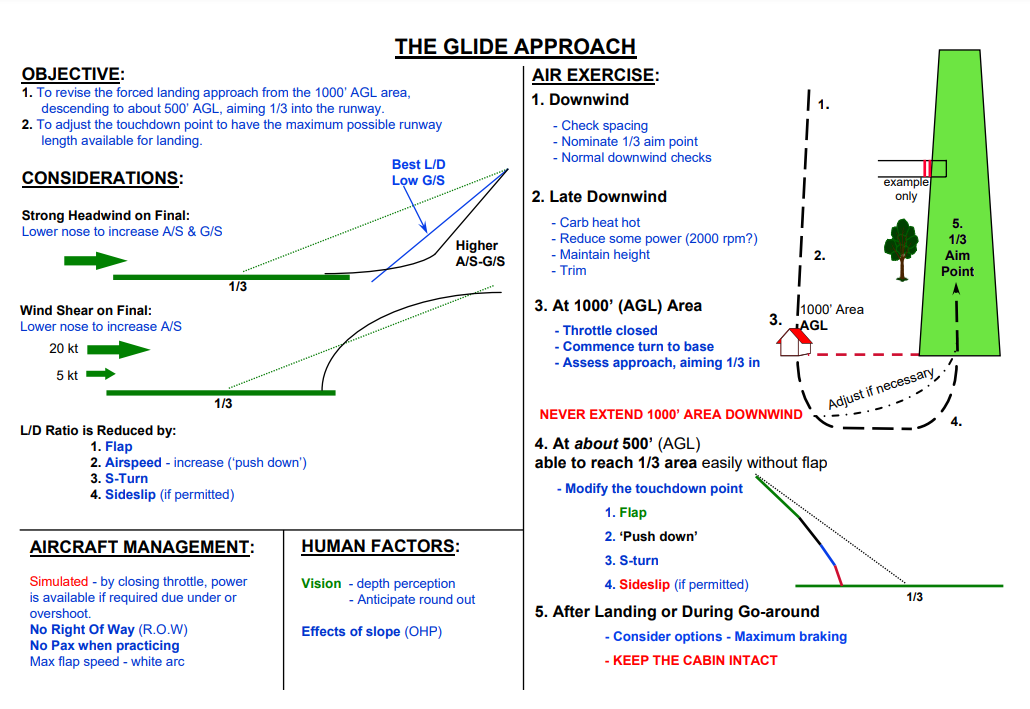
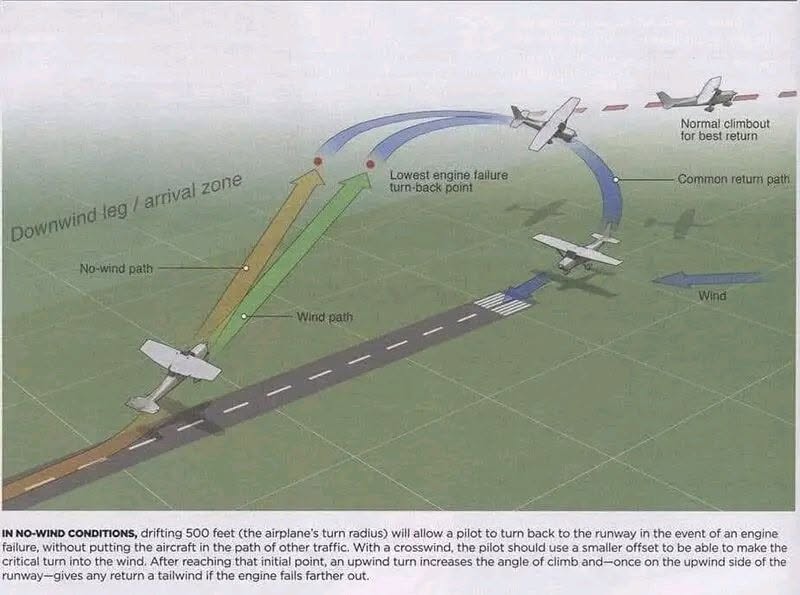
(A) forced landing procedure; 

(B) choice of landing area, provision for change of plan; 

(C) gliding distance; 

(D) descent plan; 

(E) key positions; 

(F) engine cooling; 

(G) engine failure checks; 

(H) use of radio; 

(I) base leg; 

(J) final approach; 

(K) landing; 

(L) actions after landing


Disclaimer:  The material presented in these YouTube videos should not be used in place of actual ground or flight instruction. Consult a certified flight instructor before attempting to conduct any flight maneuvers. 

The following training videos supplement the flight training syllabus in the Flying Training Manual


Aim  

  • To become acquainted with aircraft controls and equipment, the airborne environment, and before/after flight procedures
  • To control the aircraft on the ground
  • To learn the effect of each control when operated independently to alter the aircraft attitude
  • To learn the effects of power, trim, flaps and use of supplementary controls

Airmanship

  • Lookout, use of the external horizon, taking over and handing over control, Vfe, ATC liaison

Threat and Error Management (TEM)

  • Document checks, A check, Airborne collision, Motion sickness

Pre-Flight

  • Briefing to include school, airfield and local procedures and the location of the training area.
  • Familiarisation of aircraft documents, load sheets, authorisation and log sheets
  • Briefing of air exercise

Air Exercise

  • Aircraft checks as per the aircraft checklist to include cockpit preparation, external checks, pre-start and after start checks, power and pre-take off checks
  • To manoeuvre the aircraft safely on the ground, taxying checks, turning in confined space, introduction to ATC liaison
  • Take off and departure
  • With reference to the external horizon to learn the effect of each control when operated independently in flight – primary and secondary effects; effects of airspeed and slipstream
  • Location and use of emergency equipment
  • Brake and steering failure
  • With reference to the external horizon the effects of power, trim, flap, changing airspeed and use of supplementary controls

Emergencies

  • Location and use of emergency equipment and escape exits
  • Escape drills
  • Action in the event of fire on the ground or in the air

Post flight requirements

  • Return and securing of the aircraft
  • Aircraft maintenance and discrepancy procedures 
  • Aircraft technical logbook 

De-Briefing

  • Constructive analysis of any weak areas will be carried out at the end of the flight

Completion Standard

  • Able to identify the relevant controls and method of operation
  • To use the controls smoothly to adjust attitudes with reference to the external horizon, to be able to select and hold attitudes in trim whilst operating supplementary controls and to manoeuvre safely on the ground
  • To be aware of basic taxy emergency procedures

Emergency Descent


How to: Forced Landing

What to Do if Your Engine DIES in a Cessna 172 (ENGINE FAILURE in FLIGHT)