Flight Instructor Course
Flight Instructor Course (FIC) ✈︎ EASA
Enrolment:
If you want to start the Flight Instructor Course, please fill in this flight instructor form and we will contact you.
FIC Brief Details:
- 30 hours flying
- 125 hours ground instruction
- 6-8 weeks; Mon-Fri
Next Course Start Dates:
Monday, 28 September 2026 (1 space available)
Tuesday, 1 December 2026
Duration:
The FI course is full-time Monday to Friday and lasts 6-8 weeks, dependent on weather conditions.
Subject to availability a part-time course may be offered.
Price:
€ 9,495
Pre-Entry Requirements:
To enrol in the Flight Instructor Course (FIC), the pilot shall:
- Hold a valid EASA CPL(A); Or:
- EASA PPL(A) with CPL theory exams passed, and have 200 hours total flight time, including 150 hours as PIC
And: -
- Be at least 18 years old
- Have 30 hours on SEP aeroplanes, including 5 hours in the last 6 months preceding the pre-entry flight test.
- Have 10 hours of instrument flight instruction (of which up to 5 hours may be in a simulator)
- Hold a valid Class one (1) Medical certificate
- Pass an entry flight assessment within the 6 months preceding the start of the FIC with a Fly EPT Spain flight examiner
- Have a valid Single Engine Piston (Land) class rating endorsement
Flight Instructor Course (FIC) ✈︎ Description
The Flight Instructor Course (FIC) equips qualified pilots with the skills, knowledge and certification to train ab-initio student pilots by providing ground and flight instruction for the issue of an EASA Part-FCL PPL(A) as well as class and type ratings for Single Engine Piston (SEP) aeroplanes.
Spread over six (6) to eight (8) weeks of full-time study, the FIC includes 125 hours of ground school covering theoretical knowledge instruction during which time a student instructor will refresh their theoretical knowledge (much of it online) and learn how to teach, prepare and give technical presentations as well as pre-flight and post-flight briefings.
Additionally, there is 30 hours of flight instruction, of which 25 hours is dual, and 5 hours mutual flying with another student instructor or qualified FI to practice flight demonstrations. During dual instruction, the student instructor will learn how to demonstrate all PPL exercises, evaluate a student's performance and correct student errors.
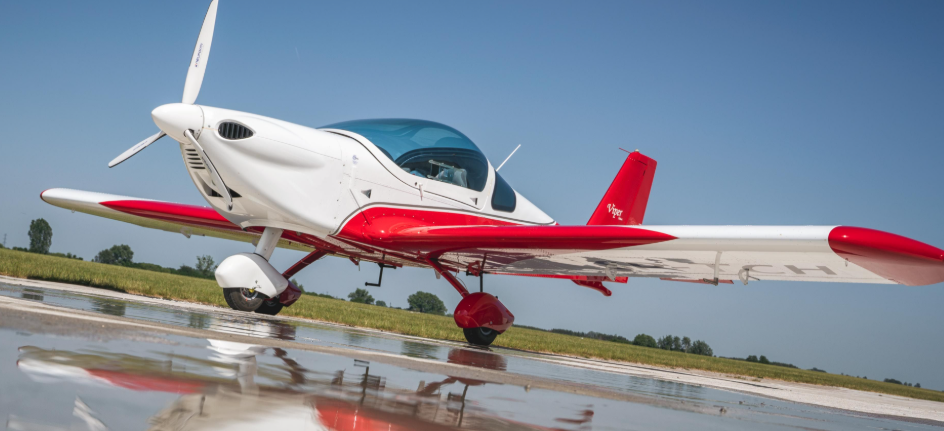
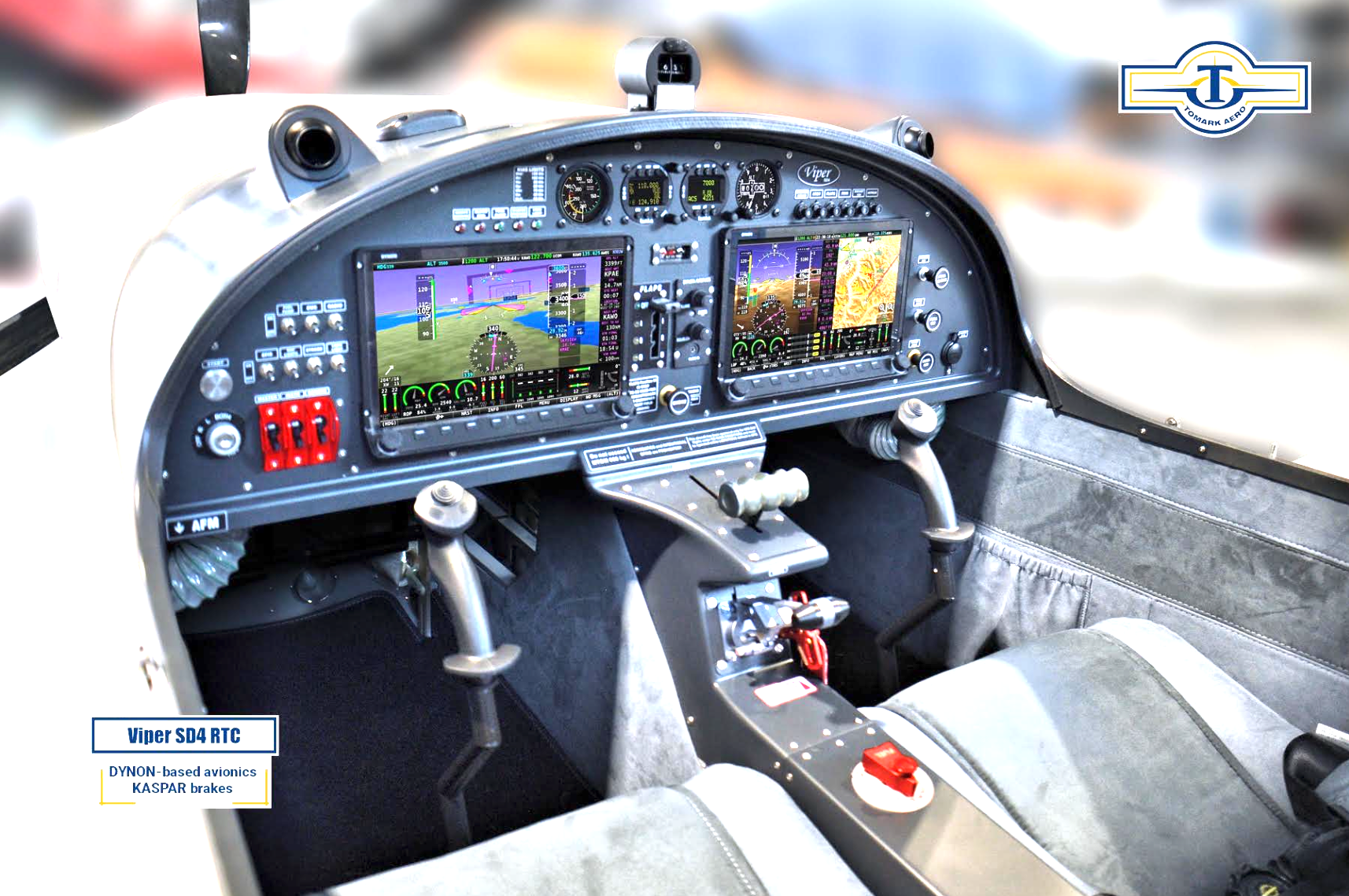
Flight training is performed in either a TOMARK VIPER SD RTC or TECNAM P2002-JF, with stalling and spin training demonstrations on a fully aerobatic Cessna C150 Aerobat. The curriculum covers everything from demonstration techniques to theoretical teaching methods, preparing FI students to competently deliver both practical flight training and academic instruction with confidence.
On completion of the Flight Instructor Course (FIC) a pilot will have the ability to instruct a student to the level required for the issue of PPL(A), including theoretical knowledge instruction.
Training comprises:
- 125 hours of ground school, and includes online courses
- 24 hours flying in a TOMARK VIPER SD4 RTC or TECNAM P2002-JF
- 1 hour flying in a Cessna C150 Aerobat
- 5 hours mutual instruction in a TECNAM P2002-JF
Restricted Flight Instructor
Upon completion of the FIC and passing the assessment of competence (AoC), the instructor's privileges are initially restricted in accordance with Part FCL.910.FI and “FI — Restricted“ will be indicated on the licence under “Remarks” / “Remarks and Restrictions”. Among the restrictions the instructor will NOT be allowed to authorise student pilots to conduct first solo flights and first solo cross-country flights. Only a qualified flying instructor, i.e. FI(A), is permitted to deliver ab-initio pilot training so the restricted FI is limited to conducting flight instruction under the supervision of an unrestricted FI(A) of the same aircraft category until sufficient experience is gained for the restriction to be removed.
Once an FI(A) has completed 100 hours of flight instruction in aeroplanes and/or TMGs and supervised at least 25 student solo flights, with the supervising EASA FI(A) approval, those FCL.910.FI restrictions may be removed from the FI certificate and the instructor is granted 'unrestricted' privileges, the licence is simply endorsed FI(A) under 'Item XII – Ratings and certificates' and you will legally be allowed to authorise student pilots to conduct first solo and first solo cross-country flights.
Further Flight Instructor Courses
The further extension of the privileges of the FI(A) is dependent on the total number of hours flown, hours flown as a flight instructor and is subject to additional training and passing an Assessment of Competence (AoC)
The privileges of an FI(A) flight instructor i.a.w. FCL.905.FI include all single-pilot training, and are to instruct for the flight training for issue, revalidation and renewal of various licences and ratings, including, and in accordance with: -
- PPL(A), LAPL(A); FCL.905.FI(a)
- Single Engine Piston (SEP) class rating SEP(land); (single engine type ratings); FCL.905.FI(b)
- Class and type ratings for single-pilot aeroplanes, except for single pilot high-performance complex aeroplanes, and multi-pilot operations; FCL.905.FI(c)
- CPL(A) (minimum 200 hours as a flight instructor); FCL.905.FI(e)
- VFR Night Rating; FCL.905.FI(f)
- Special ratings, Towing gliders / banners, Aerobatics; FCL.905.FI(g)
- Instrument Rating (IR), Basic Instrument Rating (BIR)(A), En-Route Instrument Rating (EIR)(A), Competency-Based Instrument Rating (CB-IR)(A); FCL.905.FI(h)
- Multi-Engine Piston (MEP) class and type ratings; FCL.905.FI(i)
- Instructor certificates - Flight Instructor FI(A), Instrument Rating Instructor IRI(A), Class Rating Instructor CRI, Synthetic Training Instructor STI, and Mountain Instructor; FCL.905.FI(j)
- MPL (requires additional training and checking); FCL.905.FI(k)
An instructor can therefore progress their FI(A) career with short, focused training modules:
- Night instructor
- Aerobatics instructor
- Towing instructor
- Multi-Engine Piston (MEP) instructor
- Class Rating Instructor (CRI) (both multi-engine & single engine)
- Instrument Rating Instructor (IRI)
- FIC Instructor
Important to note:
There is no night instructor course as such, or an aerobatics instructor course, or a towing instructor course. After an FI(A) has the restriction removed, and the instructor holds on their licence the underlying rating, the FI(A) can extend their privileges through additional training and checking (assessment of competence).
For the less complex trainings, for example, Night instructor, the AoC may be performed by a FI(A), i.e. senior flight instructor certified i.a.w. FCL.905.FI(j)
In order to provide training for instrument rating (IR) or a multi-engine piston (MEP) rating, the instructor does not need to be a holder of a standalone licence endorsement, for e.g. IRI(A) or CRI MEP(land). All the IRI(A) and CRI MEP(land) privileges are merged into the FI(A).
Night Instructor Course
There is no separate standalone “Night Instructor” certificate or night instructor course. FCL.905.FI(f) allows the FI(A) to extend the privilege to instruct for the EASA FCL.810 Night Rating, and to become qualified to teach you need to: -
Pre-Course Requirements
- Hold a valid FI(A) certificate
- Hold an FCL.810 night rating
Course Content
- 1 hour flying
- 2 hours ground school
Assessment of Competence
- Demonstrate your ability to instruct at night to an appropriately qualified FI(A) (**)
- Meet the night-experience requirement of FCL.060(b)(2).
** Note: FCL.905.FI(f)(3) specifically requires compliance with FCL.060(b)(2). This is important because simply having a night rating is not enough. FI(A) must also satisfy the applicable recent-night-experience requirements when exercising the privilege.
What does the instructor demonstration cover?
In practical terms, instructor should be able to demonstrate that they can teach the student the FCL.810 night syllabus, and EASA's AMC material specifically includes “Night Flying” exercises covering the following areas:
- night pre-flight inspection
- night vision and physiology
- use of cockpit / landing lights
- taxiing at night
- runway and aerodrome lighting
- night take-off
- night circuit
- approach and landing
- navigation at night
- night weather considerations
- disorientation
- emergency procedures
- night cross-country procedures
- briefing and debriefing
Towing Instructor Course
To teach the EASA FCL.805 Towing Rating: -
Pre-Course Requirements
- Hold a valid FI(A) or CRI(A)
- Hold an EASA FCL.805 Towing rating
Course Content
- There is no Towing Instructor Course
- Instructor shall demonstrate their ability to instruct for the towing rating to an FI(A).
Aerobatics Instructor Rating
To teach the EASA FCL.800 Aerobatic Rating: -
Pre-Course Requirements
- Hold a valid FI(A) or CRI(A)
- Hold an EASA Part-FCL.800 Aerobatic rating
Course Content
- Part FCL 905.FI does not specify a course called Aerobatic Instructor Course. Instead FCL.905.FI(g) provides the privilege to instruct for an aerobatic rating providing you hold the FCL.800 aerobatic rating, and you can demonstrate your instructional competence, i.e. ability to instruct for the aerobatic rating to an FI qualified under FCL.905.FI(j).
UPRT Instructor Training Course
For an instructor to teach the FCL.745.A Advanced UPRT course, FCL.915(e) requires:
Pre-Course Requirements
- Hold a valid FI(A) or CRI(A)
- Hold an EASA Part-FCL.745.A UPRT rating;
- 500 hours flight time as a pilot of aeroplanes, including 200 hours flight instruction
Course Content
- During an ATO UPRT Instructor Training Course an instructor's competence is assessed continuously.
- There is no fixed number of hours for the EASA UPRT instructor course. However, the AMC specifies a pre-course assessment within six (6) months before the course and training covering:
- advanced UPRT theory
- upset recovery
- instructor techniques
- spin recovery
- physiological / psychological effects
- startle and surprise
- train-to-proficiency techniques.
- The ATO issues a course-completion certificate, and the privilege is entered in the instructor's logbook by the HT
- Once qualified, the privilege has a one (1) year refresher requirement
IR(R) Instructor Rating
Pre-Course Requirements
- Hold a valid FI(A);
- Hold a valid IR(R);
- Completed at least 10 hours flight time by sole reference to instruments in an aeroplane, FFS, FTD 2/3 or FNPT II.
Course Content
- Comprises at least 5 hours of flight instruction in an aeroplane with an IRI and has passed the Assessment of Competence
Multi-Engine Piston (MEP) Instructor Rating
To qualify for issue of the CRI MEP rating, FCL.915.CRI requires candidate must have at least:
Pre-Course Requirements
- Hold a valid CRI(A);
- Hold a valid single-pilot Multi-Engine Piston (MEP)(Land) Class Rating;
- 30 hours PIC on an applicable type or class of aeroplane;
- 500 hours flight time as a pilot of aeroplanes.
Course Content
- Min. 5 hours flight instruction
- 10 hours ground instruction
FIC Instructor Rating
Pre-Course Requirements
- Hold a valid FI(A)
- 500 flying hours’ instructional experience.
Course Aim
To train an FI to enable them to train Flight Instructors.
Course Content
- 2 hours flying
- 20 hours ground studies
Frequently Asked Questions
Q: Will I be offered a paid flight instructor job with Fly EPT Spain?
A: Yes, subject to passing the FI Assessment of Competence (AoC) and the (Area 100 KSA) 'attitude' test, we hope you can join us as a flight instructor. We are always in a constant need for new FI's because our instructor staff are continuously moving on to fly bigger aeroplanes. Most professional pilots begin their flying careers as an instructor.
Q: What is the (Area 100 KSA) 'attitude' test?
A: Area 100 KSA - Knowledge, Skill, Attitude - is the foundation through which the nine (9) pilot core competencies that define a competent pilot are developed and demonstrated.
In terms of attitude, we are focused on how you as a pilot approach the situation in terms of safety mindset, good decision-making, teamwork, communication, situational awareness, professionalism, resilience, willingness to challenge, and openness to feedback. These behaviours tie into the KSA core pilot competencies. Fly EPT Spain has fully embedded Area 100 KSA within its training approach and seeks instructors with the right pilot 'attitude' who can ensure the student's non-technical skills are developed alongside their technical competencies.

Q: Which aircraft will I fly for the FI course?
A: From November 2026, a factory brand new TOMARK VIPER SD4 RTC with Dynon avionics display, with the TECNAM P2002-JF as a back up, and for stalling and spinning exercises, the Cessna C150 Aerobat